
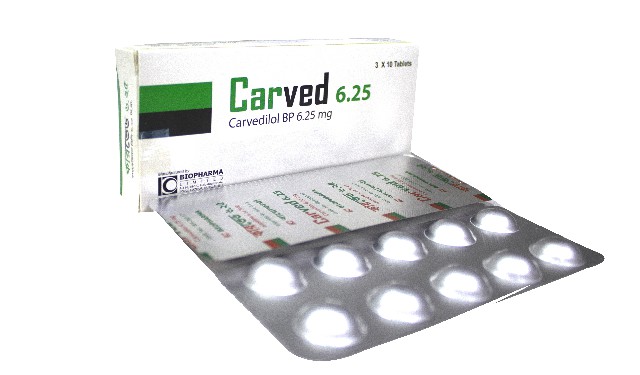
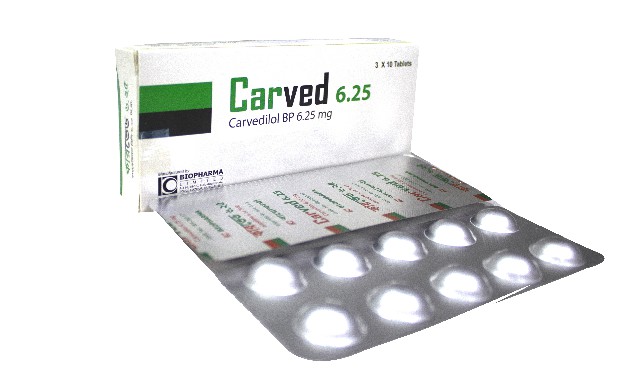
Carved
Carvedilol
Composition
- Carved 6.25 mg Tablet: Each film-coated tablet contains Carvedilol BP 6.25 mg.
Pharmacological Action
- Carvedilol is a racemic mixture in which nonselective b-adrenoreceptor blocking activity is present in the S (-)enantiomer and a-adrenergic blocking activity is present in both R(+) and S(-) enantiomers at equal potency. Carvedilol has no intrinsic sympathomimetic activity.
Indications
- It is indicated for the treatment of Essential hypertension and chronic stable angina pectoris. It also used as adjunctive treatment of moderate to severe stable chronic heart failure
Contraindications
- Hypersensitivity to the carvedilol or to any of the excipients of Carvedilol
- Heart failure belonging to NYHA Class IV of the heart failure classification with marked fluid retention or overload requiring intravenous inotropic treatment.
- Chronic obstructive pulmonary disease with bronchial obstruction.
- Clinically significant hepatic dysfunction.
- Bronchial asthma.
- AV block, degree II or III (unless a permanent pacemaker is in place).
- Severe bradycardia (<50 bpm).
- Sick sinus syndrome (incl. sino-atrial block).
- Cardiogenic shock.
- Severe hypotension (systolic blood pressure below 85 mmHg).
- Prinzmetal's angina.
- Untreated phaeochromocytoma.
- Metabolic acidosis.
Dosage and Direction for use
Essential Hypertension
Carvedilol may be used for the treatment of hypertension alone or in combination with other antihypertensives, especially thiazide diuretics. The recommended maximum single dose is 25 mg and the recommended maximum daily dose is 50 mg.
- Adults: The recommended initial dose is 12.5 mg once a day for the first two days. Thereafter, the treatment is continued at the dose of 25 mg/day.
- Elderly: The recommended initial dose for hypertension is 12.5 mg once a day which may also be sufficient for continued treatment.
However, if the therapeutic response is inadequate at this dose, the dose may be further increased gradually at intervals of two weeks or more rarely.
Chronic stable angina pectoris:
- Adults: The recommended initial dosage is 12.5 mg twice a day for the first two days. Thereafter, the treatment is continued at the dose of 25 mg twice a day. If necessary, the dose may be further increased gradually at intervals of two weeks or more rarely to the recommended maximum dose of 100 mg a day divided into two doses (twice daily).
- Elderly: The recommended initial dose is 12.5 mg twice daily for two days. Thereafter, the treatment is continued at the dose of 25 mg twice daily, which is the recommended maximum daily dose.
Heart Failure:
- Carvedilol is given in moderate to severe heart failure in addition to conventional basic therapy with diuretics, ACE inhibitors, digitalis, and/or vasodilators. The initial dose is 3.125 mg twice a day for two weeks. If this dose is tolerated, the dose may be increased slowly with intervals of not less than two weeks up to 6.25 mg twice a day, then up to 12.5 mg twice a day, and finally up to 25 mg twice a day. The dosage should be increased to the highest tolerable level.
- The recommended maximum dosage is 25 mg twice a day for patients with a body weight of less than 85 kg, and 50 mg twice a day for patients with a body weight above 85 kg, provided that the heart failure is not severe.
Side Effects and Special Precautions
In general, carvedilol is well tolerated at doses up to 50 mg daily. Most adverse events reported were mild to moderate. These are postural hypotension, dizziness, headache, fatigue, gastrointestinal disturbances, bradycardia, occasionally diminished peripheral circulation, peripheral edema, painful extremities, dry mouth, dry eyes, eye irritation or disturbed vision, impotence, disturbances of micturition, influenza-like symptoms, and rarely angina.
Drug Interaction
- Drug interactions have been seen with co-administration of carvedilol and digoxin, resulting in an increased bioavailability of digoxin. This increase is not clinically significant and does not correlate with pharmacologic response.
Overdosage and its treatment
- Symptoms and signs: In the event of an overdose, there may be severe hypotension, bradycardia, heart failure, cardiogenic shock, and cardiac arrest. There may also be respiratory problems, bronchospasm, vomiting, disturbed consciousness, and generalized seizures.
- Treatment: Atropine can be used for excessive bradycardia, while to support ventricular function intravenous glucagon, or sympathomimetics (dobutamine, isoprenaline) are recommended. If positive inotropic effect is required, phosphodiesterase inhibitors (PDE) should be considered. In the case of drug-resistant bradycardia, pacemaker therapy should be initiated.
- For bronchospasm, sympathomimetics (as aerosol or intravenous) should be given, or aminophylline may be administered intravenously by slow injection or infusion. In the event of seizures, slow intravenous injection of diazepam or clonazepam is recommended.
- Carvedilol is highly protein-bound. Therefore, it cannot be eliminated by dialysis.
Storage Instructions
- Store below 30ºC in a dry place. Keep away from light.
Warning
- Prescription-only medicine. To be used as directed by the physician.
- Keep out of reach of children.
Presentation
- Carved 6.25 mg Tablet: Each box contains 3X10 tablets in an Alu-Pvc blister strip.
Biopharma Ltd. produces CARVED 6.25 MG TABLET, It is a trusted product for alleviating various discomforts, and it's commonly found in pharmacies and stores.


