
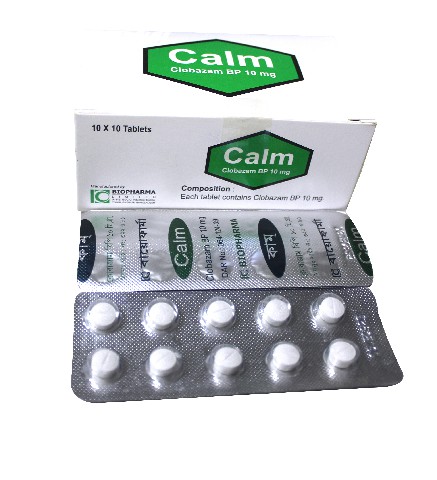

Calm
Clobazam BP
Presentation
- Calm 10 mg Tablet: Each tablet contains Clobazam BP 10 mg.
Description
- The active ingredient of the Calm tablet is clobazam. Chemically Clobazam is a derivative of benzodiazepine. It has a sustained anxiolytic action and is widely used for the relief of acute or chronic anxiety, tension, and agitation.
Pharmacology
Clobazam is readily and completely absorbed from the gastrointestinal tract and peak plasma concentration occurs within about 30 to 90 minutes after oral administration. The drug is generally widely distributed into body tissues and crosses the blood-brain barrier. The drug and its metabolites are highly bound to the plasma protein. Clobazam is extensively metabolized in the liver. It is excreted in the urine mainly in the form of its metabolites. The action of Clobazam results from the activity on the central nervous system. It directly acts on the amygdala in the limbic system, the main seat of anxiety and tension. A calm tablet produces its effect by suppressing the amygdala.
Indications
Clobazam (Calm tablet) is indicated for the relief of acute and chronic anxiety states, which may produce the following symptoms in particular: Anxiety, tension, restlessness, excitement, irritability, sleep disturbances from emotional causes, psycho-vegetative and psychosomatic disorders (for example, in the cardiovascular or gastro-intestinal area) and emotional instability. Calm tablets may be used together with antidepressants in the treatment of anxiety associated with depression. It may also be indicated as adjunctive therapy in patients with epilepsy, who are not adequately stabilized with their anticonvulsant monotherapy.
Dosage and Administration
- The initial dose should be as low as possible. This is the fundamental principle for Clobazam.
- Treatment of anxiety state: The initial dose is usually 2 Calm tablets daily. If necessary, the daily dose may be increased to 3 tablets.
- For elderly patients, total daily dose is 10 - 15 mg.
For children between 3 and 15 years of age, the daily dose is 5 - 10 mg. After improvement of the symptoms, the dose may be reduced. After prolonged treatment, Calm tablets should not be withdrawn suddenly. Otherwise, symptoms such as restlessness, anxiety, and insomnia may occur. Here, the dose should be reduced gradually under medical supervision.
Treatment of epilepsy:
- Adults and adolescents over 15 years of age: The initial dose is 10 - 15 mg daily, it may be gradually increased to a maximum of 80 mg daily. Furthermore, constant doses (e.g. 20mg/ day) and intermittent therapy have proved effective.
- Children from 3 to 15 years of age: Starting with a 5 mg dose and a maintenance dose of 0.3 - 1.0 mg/Kg body weight daily is enough for treatment with one or more other anti-epileptic drugs.
Contraindication
Clobazam (Calm tablet) should not be used in patients, who have hypersensitivity to clobazam or any of the excipients, or who have a history of drug dependence. It should not be used in the first trimester of pregnancy, and in the later stages only if there are compelling indications for use it. Calm tablet should not be taken by a nursing mother, since it passes into the breast milk. If there are compelling indications for its use, breastfeeding should be stopped. Children between the ages of 6 months and 3 years should not normally be given Calm tablets. The drug is not suitable for patients with respiratory depression and myasthenia gravis.
Precautions
- Calm tablets should be administered with caution in patients with hepatic or renal impairment. The ability to operate or drive a car may be impaired in patients sensitive to Calm tablets or in patients taking high doses.
Use in Pregnancy and Lactation
- Pregnancy: Calm tablets should not be used in pregnancy.
- Nursing mothers: Calm tablets should not be given to nursing mothers as the drug appears in the breast milk.
Side effects:
- Calm tablet is generally well tolerated. The most frequently observed side effects, particularly during the initial phase of therapy include drowsiness, ataxia, fatigue, confusion, and vertigo. These may diminish with continued therapy. Occasionally dry mouth; headache, hypersensitivity reactions, and respiratory depression may occur.
Drug Interaction
Clobazam may potentiate the effects of CNS depressants such as alcohol, analgesics, sedatives & hypnotics, and neuroleptic drugs when taken concomitantly. Clobazam may increase the plasma concentration of valproic acid when a Calm tablet is used simultaneously with an anticonvulsant in the treatment of epilepsy. The effects of muscle relaxants, analgesics, and nitrous oxide may be enhanced. Carbamazepine and phenytoin increase the metabolism of Clobazam. Concurrent treatment with cimetidine may enhance and prolong the action of clobazam.
Overdosage
- Higher doses should always be avoided. As the dose of the Calm tablet is increased, sedation progresses to hypnosis and then to stupor. Gastric lavage may be useful to remove the ingested drug or if necessary the patient may be hospitalized.
Legal Warning
- To be sold and dispensed only on the prescription of a registered physician. Keep out of reach of children.
Pharmaceutical PrecautionSto
- re in a cool, dry place and protect from light.
Commercial Pack
- Calm 10 mg Tablet: Each Box contains 10 blister packs of 10 tablets.
Biopharma Ltd. produces CALM 10 MG TABLET, It is a trusted product for alleviating various discomforts, and it's commonly found in pharmacies and stores.


