
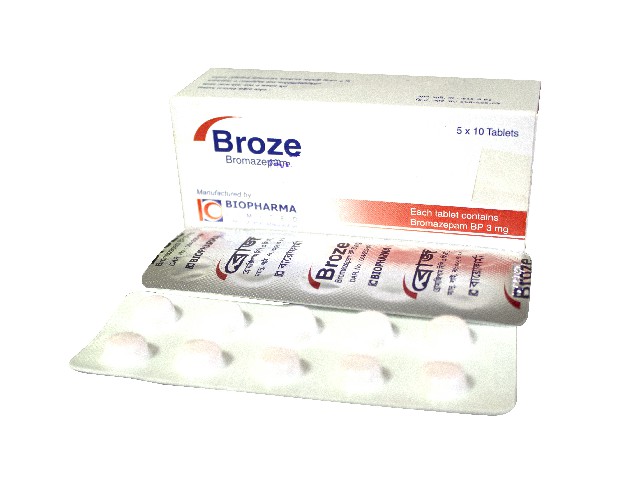
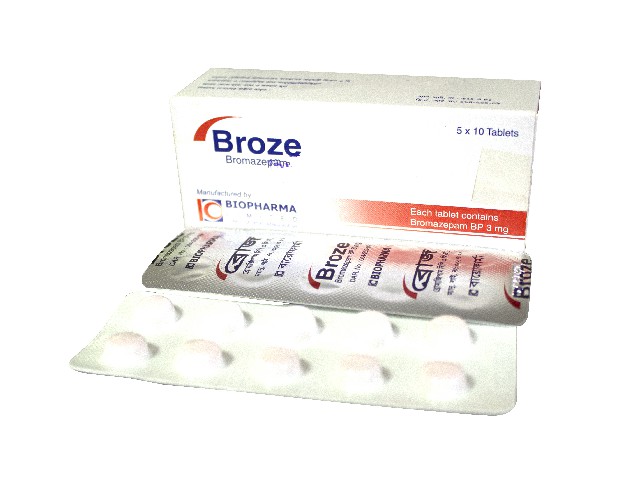
Broze
Bromazepam
Composition
- Broze 3 mg tablet: Each film-coated tablet contains Bromazepam BP 3 mg.
Pharmacology
Bromazepam is rapidly absorbed from the gastrointestinal tract. Peak plasma concentrations are usually reached within two hours of oral administration of Bromazepam. Steady-state plasma concentrations are reached in around five to nine days. Bromazepam is metabolized in the liver.
Indication
• Emotional disturbance: Acute tension and anxiety states. Agitation, insomnia, anxiety, and age-related depressive reactions.
• Functional disturbance in the cardiovascular respiratory system: pseudo angina pectoris, precordial anxiety, tachycardia, emotiogenic hypertension, dyspnea, and hyperventilation.
• In the gastrointestinal system: Irritable bowel syndrome, epigastric pain, spasm, bloating diarrhea, etc.
• In the genitourinary system: Irritable bladder and dysmenorrhea.
• Psychosomatic disorders: psychogenic headache, psychogenic dermatosis, asthma, gastric and duodenal ulcer, ulcerative colitis. Emotional reactions to chronic organic diseases.
Dosage & Administration
- The optimum dosage and frequency of administration of Bromazepam should be based on the individual patient, the severity of symptoms, and previous psychotropic drug history. The usual dosage in general practice is from 3 mg to 18 mg daily in divided doses. In exceptional circumstances, in hospitalized patients, up to the maximum daily dosage of 60 mg, in divided doses, may be given.
- Use in the elderly: Elderly patients are more sensitive to the actions of Bromazepam. Doses should not exceed half of those normally recommended,
- Use in children: Bromazepam is not recommended for pediatric use.
Contraindications
- Patients with known hypersensitivity to benzodiazepines; acute pulmonary insufficiency; respiratory depression phobic or obsessional states; chronic psychosis.
Precautions and warning
In patients with chronic pulmonary insufficiency and in patients with chronic renal or hepatic disease, dosage may need to be reduced. If Bromazepam is combined with centrally acting drugs such as alcohol, neuroleptics, tranquilizers, antidepressants, antidepressants, hypnotics, analgesics, and anesthetics, the sedative effects are likely to be intensified. The elderly require special supervision. Patients should be advised that, like all medicaments of this type, Bromazepam may modify patients’ performance at skilled tasks (driving, operating machine, etc.)
Side Effect
Common side effects include drowsiness, sedation, unsteadiness, and ataxia; these are dose-related and may persist in the following day, even after a single dose. Drowsiness may be a particular problem when Bromazepam is used in higher dosages in some patients. Other side effects are rare and include headache, vertigo, hypotension, gastrointestinal upsets skin rashes, visual disturbance & change in libido.
Use in Pregnancy and Lactation
- The use of benzodiazepines should be avoided during pregnancy, the fetus may be affected. Bromazepam is secreted through human milk. So nursing mothers should not use this drug.
Overdose
- Signs may include drowsiness, ataxia, and dysarthria, with coma in severe cases.
Storage
- Store at a cool and dry place and keep away from light. Keep out of reach of children.
Commercial Pack
- Broze 3 mg tablet: Each box contains 50 tablets in the blister pack.
Biopharma Ltd. produces BROZE 3 MG TABLET, It is a trusted product for alleviating various discomforts, and it's commonly found in pharmacies and stores.


